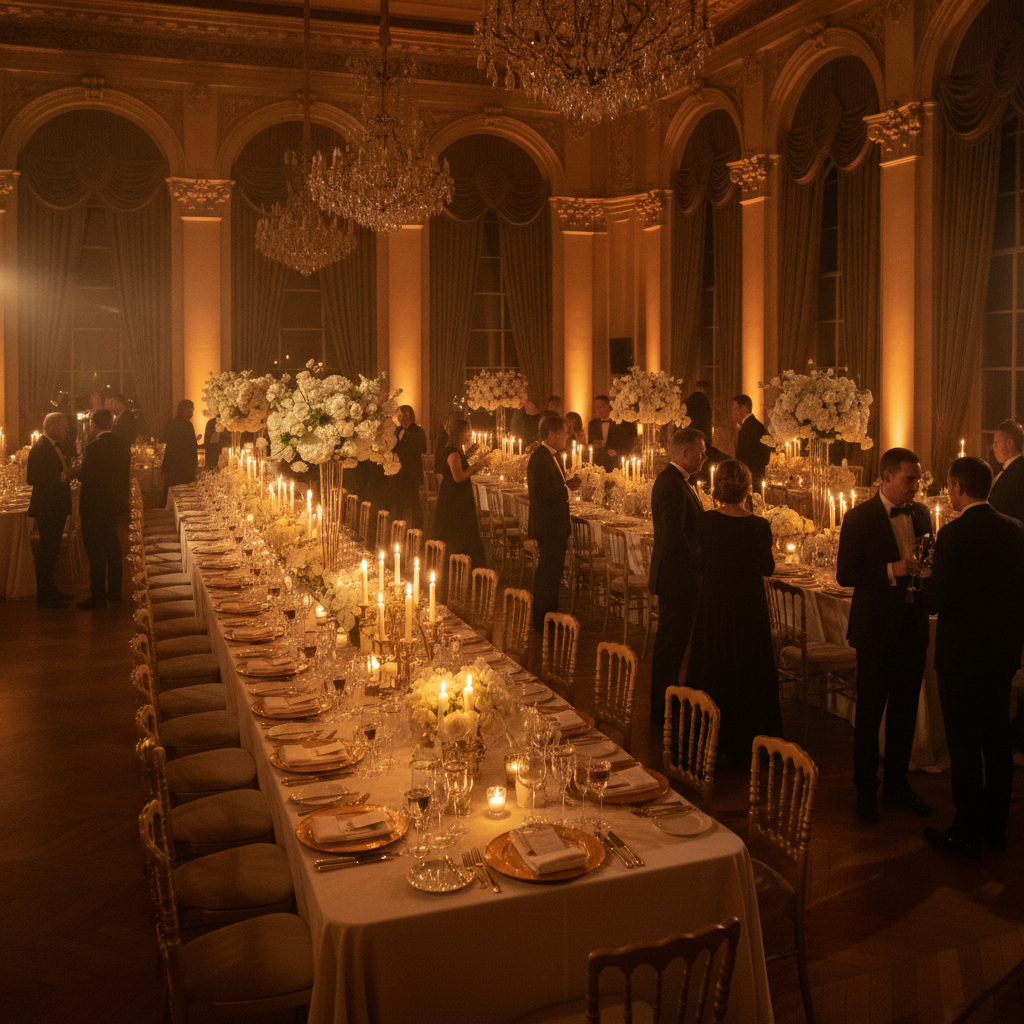
Creating a luxury event experience is the art of orchestrating every touchpoint—design, service, flow, and storytelling—so guests feel cared for and captivated. It blends meticulous planning, sensory design, and flawless production. The result is an event that feels effortless, personal, and memorable, whether in HA3 0PB or a destination venue.
By Shani Patel — Patel Events
Last updated: 2026-07-05
Introduction
A luxury event experience centers on intentional design and precision delivery. You align a clear vision with guest needs, then execute it through refined styling, curated rituals, white-glove service, and reliable show control. The hallmark is consistency—every element, from arrival to farewell, works together to delight guests.
At Patel Events, we specialize in weddings, sangeets, corporate launches, and destination receptions that feel elevated yet warm. Over 27+ years and 500+ events, we’ve learned that luxury is a system: vision, standards, and repeatable methods that protect quality at every step.
- What you’ll learn: prerequisites, a step-by-step build, troubleshooting, and advanced techniques.
- Who this helps: couples planning South Asian weddings, corporate teams launching products, and hosts curating milestone dinners.
- Why trust this guide: 98% client satisfaction and a 50+ vendor network that delivers.
Want a broader foundation first? Explore our wedding event management guide for planning fundamentals that complement this luxury-focused playbook.
Quick Summary
Define a guest-centered vision, set quality standards, and build a production plan that never leaves magic to chance. Use a detailed run of show, elevate the five senses, and audit logistics early. Luxury is the outcome of disciplined planning that frees staff to care for guests.
- Vision: one-sentence event promise, three brand pillars, mood board, and style guardrails.
- Standards: service ratios (for example, 1:10 server-to-guest for plated service) and response SLAs backstage.
- Production: a minute-by-minute run of show with contingencies and a preflight checklist.
- Design: tablescapes, lighting, and florals that read coherent across the room and up close.
- People: trained team, clear radios, and a dedicated show caller.
Before You Start (Prerequisites)
Lay the groundwork before design. Confirm objectives, audience, headcount, and cultural rituals. Lock venue constraints and power. Choose vendors with a proven luxury track record. Decide non-negotiables. These early choices prevent costly pivots and maintain quality.
Core decisions to make now
- Define your promise: In one sentence, state what guests should feel at the end (e.g., “Intimate palatial romance with modern flair”).
- Clarify audience profile: Age mix, accessibility needs, dietary preferences, and cultural protocols (crucial for nikkah or Gujarati pheras).
- Capacity and flow: Confirm guest count and target usable floor area. We recommend reserving 20–30% for circulation so movement never feels cramped.
- Venue and power: Assess ceiling height, rigging points, load-in path, and available amperage. Identify any 90° turns, narrow lifts, or shared docks that extend build time by 15–25%.
- Non-negotiables: Ritual timing, brand moments, or specific photo scenes (e.g., first-look in floral arch; choreographed sangeet entry).
Team and tools
- Planner/producer: Appoint a single point of truth. If you’re evaluating support, our hiring guide for party organizers outlines the roles and checkpoints to expect.
- Vendor set: Lighting, florals, catering, staging, audio, cinematography, and entertainment. We coordinate 50+ trusted partners to ensure cohesion.
- Workflow stack: Mood board platform, CAD for floor plans, a production calendar, and comms with channel naming (Ops, FOH, BOH, Rituals).
Local considerations for HA3 0PB
- Build your run of show to accommodate guest arrival via Kenton station, staggering valet or greeting staff in 10-minute waves to prevent bottlenecks.
- During summer weekends, pad 15–20 minutes for traffic around Northwick Park station when scheduling baraat or coach transfers.
- For sangeet nights, confirm neighborhood sound curfews early. We align entertainment blocks so high-energy sets end before any local cutoffs.
Step-by-Step Process
Luxury emerges from structure. Map a ten-step path: vision, guest journey, venue fit, sensory design, culinary narrative, production design, run of show, rehearsal, live operations, and memory capture. Each step adds a layer; together, they produce ease and wonder.
Step 1: Craft the vision statement
Write a one-sentence promise and three style pillars. Keep them visible on every brief and purchase order to prevent drift.
- Output: One sentence, three pillars, six reference images. Limit colorway to 2–3 primaries plus metallic.
- Why it matters: Decisions multiply; a clear vision reduces rework by 20–30% across an average project.
- Example: For a Gujarati wedding, we might distill “Regal warmth, layered textiles, and candlelit intimacy” as pillars guiding mandap, aisle, and reception styling.
Step 2: Map the guest journey
Design arrival, discovery, participation, and farewell. The first 90 seconds shape perceived quality; plan them precisely.
- Arrival: Greeters at 1 per 40 guests, chilled towels or welcome drink, and clear signage from curb to coat check.
- Discovery: Statement vignette (e.g., escort-card garden) that photographs beautifully within 8–10 feet of entry.
- Participation: Rituals or moments guests can join (dandiya set, brand demo, handwritten wish wall).
- Farewell: Warm send-off with petite favor, valet coordination, and lighting that guides exit routes.
Step 3: Design the sensory signature
Luxury is sensory. Align sight, sound, scent, taste, and touch so nothing fights the story. Keep each zone coherent from 3 feet (detail) to 30 feet (room read).
- Sight: Layered lighting—ambient, task, and accent—with dimmer curves pre-programmed in 5–10% increments.
- Sound: Target consistent coverage. Avoid hot spots by spacing speakers evenly; tune for speech clarity during toasts.
- Scent: Subtle florals near entry; keep food aromas away from ceremony areas.
- Touch: Natural textiles and high-quality linens; prioritize hand feel on napkins and lounge upholstery.
For deep dive inspiration on tabletops, see our tablescapes and centerpieces guide that pairs textures with floral forms.
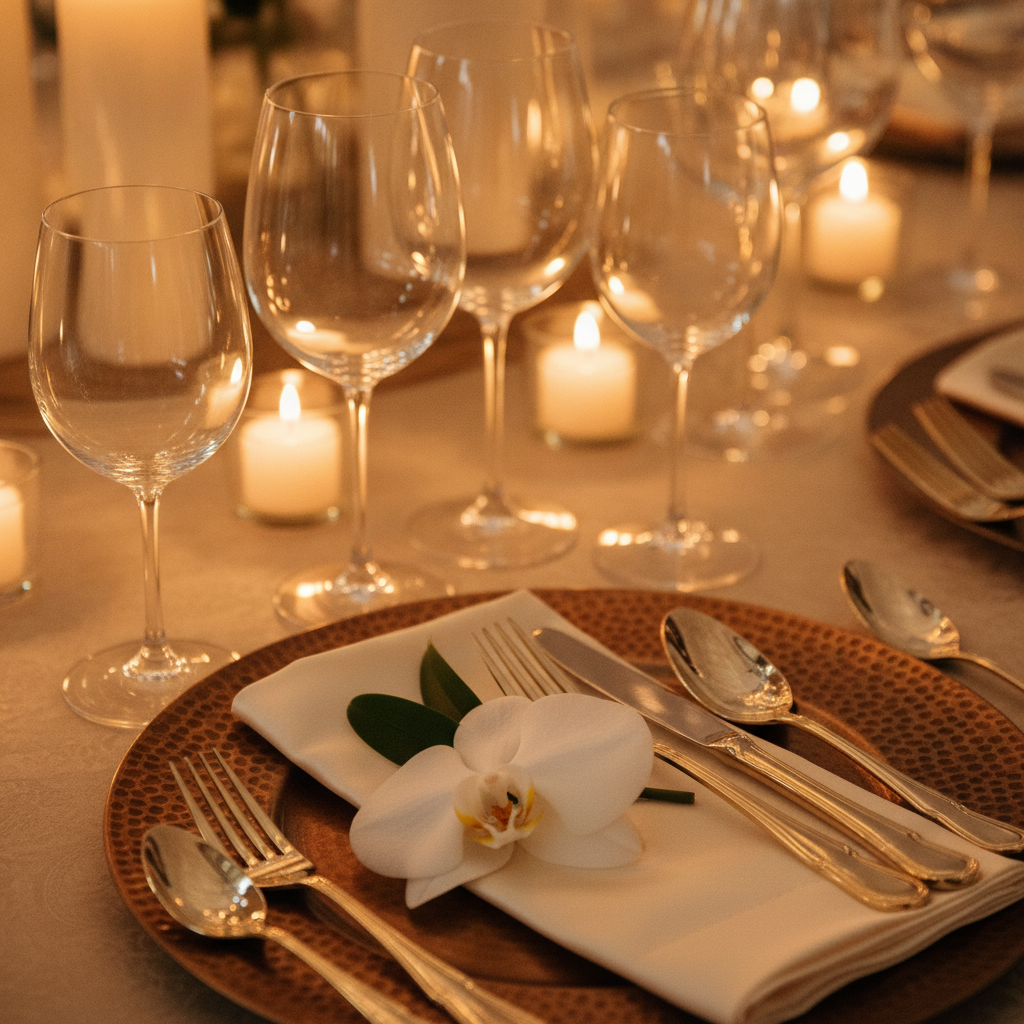
Step 4: Curate the culinary narrative
Food is memory. Build a menu arc that balances familiarity with delight while honoring cultural needs.
- Arc: Light, bright reception bites; a composed plated course; late-night comfort snacks for dance stamina.
- Dietaries: Track vegetarian, vegan, halal, and allergy counts 7–10 days out; add labeled cards at every station.
- Service: For plated dinners, a 1:10 server-to-guest ratio keeps courses timely; for family-style, add 1–2 floaters per 50 guests.
Step 5: Engineer production design
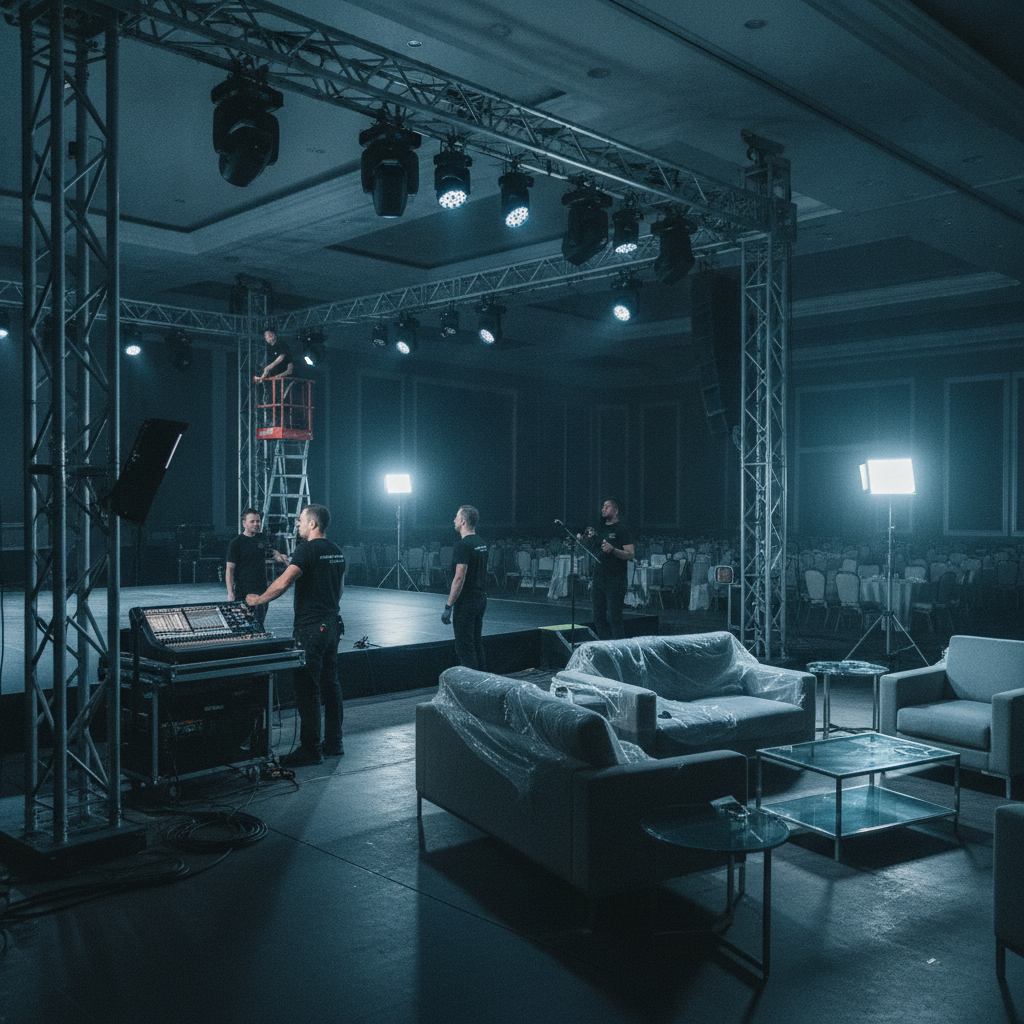
Translate design into rigs, power, and safe builds. Luxury collapses if the show stutters.
- Lighting plot: Prepatch universes; program looks for ceremony, dinner, and dance with cue stacks labeled by segment.
- Staging: Confirm load ratings; add cable ramps and anti-trip edging along guest routes.
- Power: Separate audio and lighting circuits to prevent hum; budget a 20% headroom across distro.
To visualize high-spec staging standards, review this external production overview as a reference point for corporate event environments.
Step 6: Build the minute-by-minute run of show
Create a living document with timestamps, owners, comms channels, and cues. Great shows feel effortless because they are rehearsed.
- Baseline: Include timestamps, cue names, channel tags, and backups. Aim for no more than 60–90 seconds between programmed moments during peak segments.
- Rehearsal: Time speeches; keep to 90–120 seconds each to protect energy and service windows.
- Contingencies: Build A/B/C plans for weather, AV, and late arrivals. Note who decides and how you’ll communicate.
Step 7: Rehearse rituals and moments
From a nikkah khutbah to a first dance, walk the exact paths with principals. Practice improves timing by 10–20% and calms nerves.
- Blocking: Mark positions for officiants, photographers, and family so sightlines remain open.
- Audio: Test every mic and monitor; rehearse handoffs and cues.
- Photography: Share must-capture list with cinematography and photo teams; pre-light high-impact scenes.
Step 8: Run a white-glove live operation
On show day, small acts define luxury: anticipating needs, reading the room, and staying invisible until needed.
- Staffing: Assign a guest liaison (1 per 100 guests) to circulate, resolve micro-issues within 2–3 minutes, and relay to BOH.
- Hospitality: Water service on rotation every 10–12 minutes; replace napkins on request with quiet grace.
- Ops cadence: 15-minute stage manager check-ins with FOH and BOH to keep service and show locked together.
Corporate teams: see how we align brand and experience in our corporate events guide that covers demos, keynote timing, and sponsor visibility.
Step 9: Capture and share memory
Immersive experiences live on through film and photography. Plan where the camera lives, not just what it sees.
- Shot plan: 12–15 cornerstone scenes; 3–5 b-roll loops per zone; 1–2 wide establishing shots each hour.
- Audio: Record clean feeds of vows, toasts, and performances; capture room tone for sound design.
- Post: Prepare a same-week highlight reel to sustain excitement and share gratitude.
Step 10: Elevate encore and exit
Endings are emotional peaks. A great exit sequence can lift perceived quality by as much as any single décor element.
- Encore moment: One last designed beat—sparkling farewell, soft confetti, or private final dance.
- Logistics: Stage transport in a quiet lane; schedule valet in 5-minute waves; offer petite favors at the door.
- Thank-yous: Have handwritten notes for VIPs prepared 24 hours prior; hand deliver discreetly.
Process table: plan → produce → perform
| Phase | Primary deliverables | Owner | Typical duration |
|---|---|---|---|
| Plan | Vision, guest journey, floor plan, vendor bookings | Planner + Client | 4–8 weeks |
| Produce | Design build, menus, show file, rehearsals | Producer + Vendors | 2–6 weeks |
| Perform | Live ops, hospitality, capture, breakdown | Show Caller + FOH/BOH | Event day + 1–2 days |
Free planning consult: If you’re mapping a luxury wedding or corporate launch, request a short discovery call. We’ll outline the first 3 steps and vendor priorities tailored to your goals in HA3 0PB.
Troubleshooting
Most luxury hiccups are predictable: load-in delays, audio feedback, service lags, and timeline drift. Diagnose with checklists and buffers. Separate cause from symptom quickly, assign a clear owner, and recover flow with a pre-approved cue stack.
Common issues and fast fixes
- Load-in running late: Activate compressed build sequence; shift non-visible décor to post-guest arrival; protect stage and lighting integrity first.
- Audio feedback or dropouts: Separate RF frequencies, re-seat loose XLRs, and lower hot mics 3–5 dB. Keep backup handhelds staged at wings.
- Service lag during dinner: Move to family-style for a course, or add a runner per 30 guests for 20 minutes to catch up without compromising presentation.
- Timeline drift: Trim transitions to 30–45 seconds; consolidate two speeches; trigger background look while FOH rebalances.
- Overcrowded dance floor: Expand by removing one lounge pod; drop a wider wash to invite edge participation; lengthen the set by 5 minutes.
Ritual-specific watchouts
- Nikkah: Confirm mic positions for imam and couple; stage witness signing pens and a quiet table with proper light.
- Gujarati pheras: Keep aisle widths at 6–8 feet; pre-brief photographers to preserve sacred movement paths.
- Sangeet: Sound check every dance track; cue captains for each group; keep hydration at wings and a quick shoe repair kit.
For creative perspective on what constitutes “luxury,” this editorial view of craftsmanship and detail can spark ideas for your narrative and finishes. It’s a useful lens when debating where to upgrade textures or lighting in a luxury-focused context.
Advanced Tips
To move from excellent to exceptional, protect white space, pre-visualize every frame, and choreograph transitions. Luxury lives in pacing: how guests move, how lights shift, when music breathes. Invest in invisible systems that let hospitality shine.
Elevate design without crowding
- Negative space: Leave 10–15% of table surface open; the absence of clutter reads as sophistication from 10 feet away.
- Color temperature: Keep candlelight at 2,700–3,000K; avoid mixing cool uplights unless for deliberate contrast.
- Florals: Mix heights (low runners plus 28–32-inch pedestals) to preserve sightlines and camera angles.
Upgrade the guest journey
- Wayfinding: Subtle lighting cues (downlight pools every 10–12 feet) guide guests without signs.
- Micro-surprises: One small reveal per hour—signature dessert pass, roving musician, or brief lighting look—keeps curiosity high.
- Quiet luxury: Choose a single hero material and repeat it across zones to create calm coherence.
If your event includes travel or multiple venues, we can dovetail this plan with our destination frameworks, including India playbooks. For coordination principles across markets, this operations snapshot of a Delhi venue offers a comparative lens on event workflows.
Frequently Asked Questions
Luxury is repeatable when you use clear standards. Below are concise answers to common questions we receive from couples, families, and corporate teams planning elevated events.
What makes an event feel “luxury” to guests?
Consistency and care. Guests notice seamless service, coherent design, and thoughtful pacing. When arrivals are smooth, speeches are tight, and lighting supports the mood, the event feels intentional and premium without shouting.
How early should we start planning a luxury wedding or sangeet?
Begin design and vendor conversations as soon as your date and venue are in sight. Many couples lock core partners months ahead so standards drive decisions. A structured timeline protects choices like florals and entertainment from late compromises.
Do we need a show caller for smaller luxury events?
If your program includes multiple cues—lighting shifts, performances, or speeches—a show caller keeps the energy cohesive. Even for intimate gatherings, the role preserves pacing so hospitality and conversation remain the focus.
How do you adapt luxury standards to corporate launches?
Align brand pillars to guest journey, then script demos and keynotes with tight cues. We build sponsor visibility, manage AV risk, and time hospitality around content beats. For examples and frameworks, review our corporate events guide.
Key Takeaways
Luxury is intentional, not accidental. Define a promise, design the senses, and rehearse the show. Protect pacing and service so guests feel cared for without seeing the work behind the scenes.
- Start with a one-sentence promise and three pillars to prevent design drift.
- Engineer the five senses from entry to exit; test lighting and audio early.
- Build a minute-by-minute run of show and rehearse high-stakes moments.
- Staff for care: clear roles, radios, and a calm show caller.
- Capture memories with planned angles and clean audio feeds.
Additional Resources
Use these hand-picked guides to deepen your plan. They extend this how-to into decor, entertainment, and format-specific playbooks so you can execute with confidence.
For styling specifics, our tablescape guide pairs textures and florals. Planning a dance-forward evening? Read how to plan a sangeet night with choreography, music blocks, and attire. If you’re organizing a milestone party, see our party planner guide for formats and hosting tips. For broader context on ceremonies in our area, review our Harrow weddings and sangeets planning guide.
For a different lens on corporate environments, this overview of staging and operations is a useful comparator for corporate events in venue-led settings.
Conclusion
A luxury event is a thousand small, aligned decisions. When vision meets disciplined production, the experience feels effortless and personal. Guests leave energized, honored, and eager to share the story of your celebration.
- Clarify the promise, protect pacing, and choreograph hospitality.
- Use standards and checklists to make excellence repeatable.
- Need a partner? Patel Events brings 27+ years, 500+ events, and a 50+ vendor network to your side.
Ready to start? Book a brief discovery session in HA3 0PB. We’ll map your first three steps and align vendors to your vision.