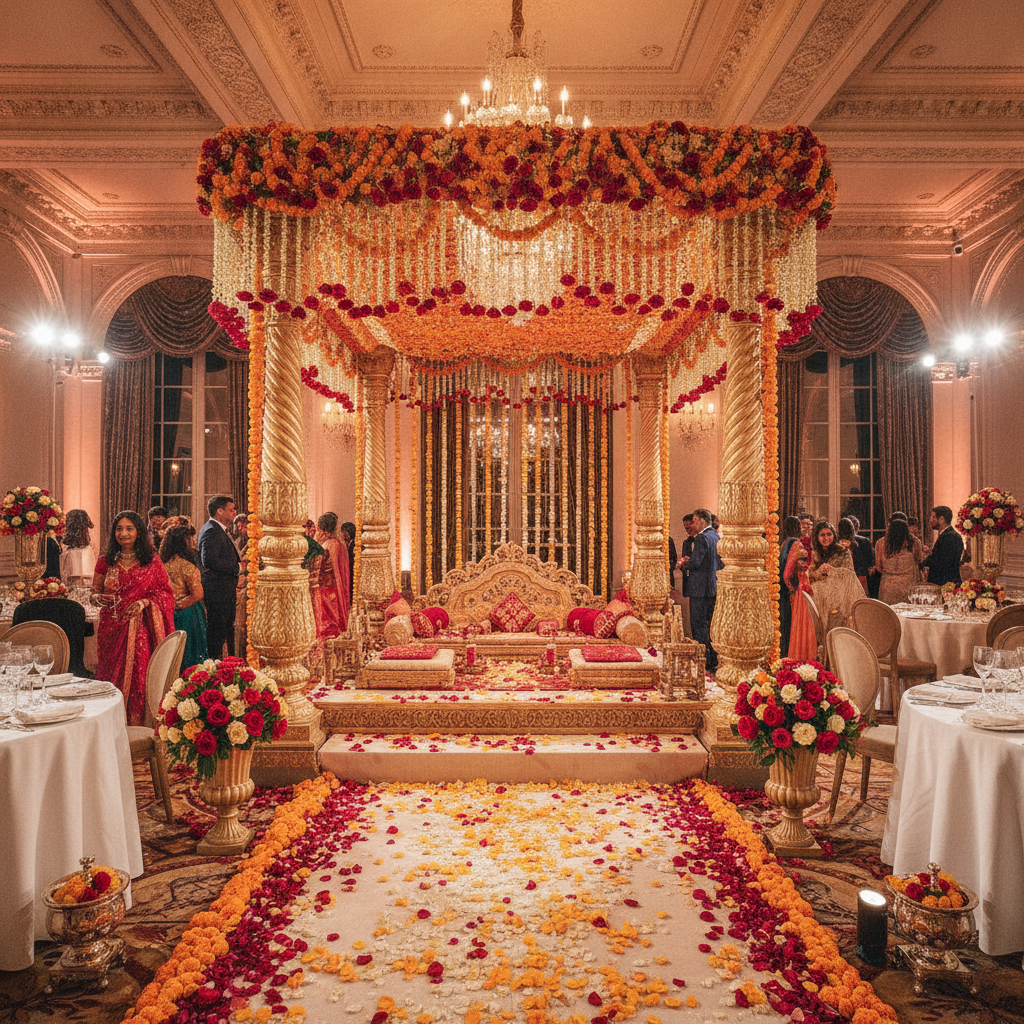
Gujarati wedding planning in London is the full-service orchestration of multi-day Hindu ceremonies, design, and logistics tailored to Gujarati customs. It typically spans 3–5 events over 2–3 days, with a 6–12 month lead time for venues and vendors. Done well, it preserves tradition, delights guests, and keeps families stress-free.
By Shani Patel • Last updated: July 6, 2026
Hero Section
Patel Events turns your Gujarati wedding vision into a seamless, modern-yet-traditional celebration. We design the mandap, schedule every ritual, coordinate priests and vendors, and direct the show so you can be fully present with family and friends.
We’re a London-based team with 27+ years of experience and 500+ events delivered. Our focus is simple: honor your family’s traditions while elevating guest experience with thoughtful design, crisp timelines, and clear communication. From garba energy to reception elegance, we build momentum across every moment.
In our experience, successful wedding weekends share three traits: clear plans, consistent styling, and decisive show-calling. That’s why we document every cue, from phera timing to first dance, and place a senior producer backstage to keep transitions under 60–90 seconds.
Quick Summary
Planning a Gujarati wedding in London requires ritual fluency, vendor coordination, and venue-savvy logistics. Patel Events streamlines design, ceremonies, entertainment, and guest movement into one integrated plan so parents feel heard, timelines hold, and every moment lands emotionally.
Here’s what you can expect working with our team in London:
- End-to-end guidance across 3–5 events (pithi/haldi, garba/sangeet, wedding, reception)
- Design development for mandap, florals, staging, lighting, and tablescapes
- Guest logistics: RSVPs, coach routing, and wayfinding for 150–600 guests
- Show-calling with minute-by-minute cues and 2–3 contingency paths
Introduction
Gujarati weddings blend sacred ritual with lively celebration. In London, success hinges on synchronizing priests, venues, décor, AV, and transport across multiple days. Our structured approach protects tradition while reducing stress for families and delivering a polished guest experience.
Every Gujarati wedding tells a story—often across 12–20 hours of scheduled programming. Typical weekends include pithi, grah shanti, sangeet/garba, the wedding ceremony, and a formal reception. Each function introduces its own load-in windows, sound checks, and catering service timelines that must interlock with zero drift.
London adds unique constraints: venue sound curfews commonly at 11 p.m., coach access rules, and unionized AV load-in schedules. We build 15–20% schedule buffers, design quick-turn sets that re-dress in under 45 minutes, and script transitions that keep momentum high for 250–600 guests.
For deeper context on sequencing, our Gujarati wedding timeline guide outlines milestones from 12 months out to week-of checks, including invitation mail dates, RSVP targets, and rehearsal timing.
Services Offered
Our Gujarati wedding planning service covers design, rituals, entertainment, logistics, and on-the-day direction. We integrate décor, AV, catering, and transport into one run of show, ensuring ceremonies are culturally faithful and celebrations are effortless for your guests.
We deliver full-service planning and production tailored to Gujarati traditions in London:
- Ritual management: grah shanti, pithi/haldi, sangeet/garba, baraat, ceremony, vidai, reception.
- Design and styling: mandap architecture, floral palettes, aisle treatments, tablescapes, lighting design.
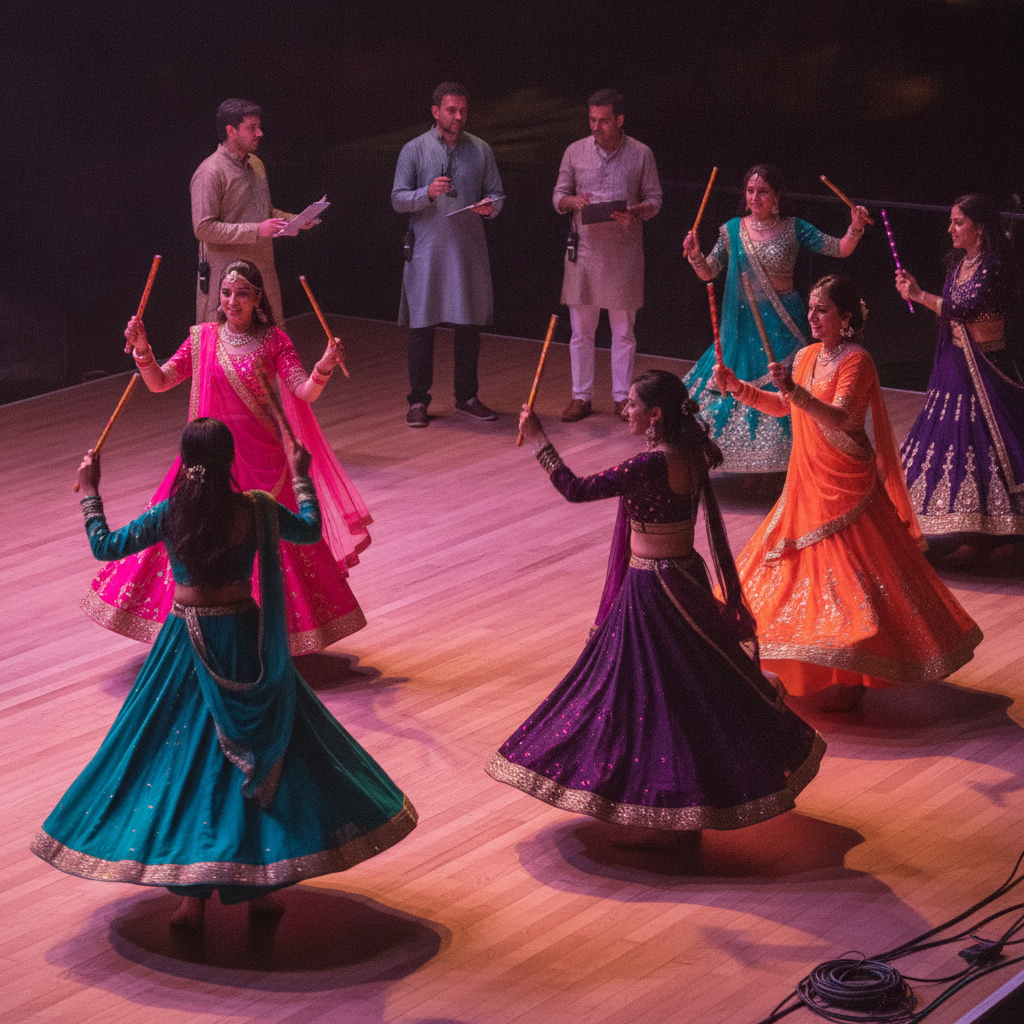
- Entertainment curation: DJs, live acts, MCs, and dance programming (including 12–20 minute medleys).
- Guest logistics: RSVP workflow, coach routing, welcome desks, and station meet-and-greets for 100–600 guests.
- Cinematography: coverage from sangeet to reception with shot lists for key rituals and family moments.
Design development starts with a lookbook and color story, then proceeds to sample tables for linens, chargers, and centerpieces. For sangeet stages, we specify 18–24 foot widths to support dance groups safely, and for ceremonies we model guest sightlines to avoid obstructed views for more than 10% of seats.
Explore how we streamline entertainment blocks in our sangeet planning playbook, and how coordinators support elders and out-of-town guests in our coordinators’ guide.
The Process
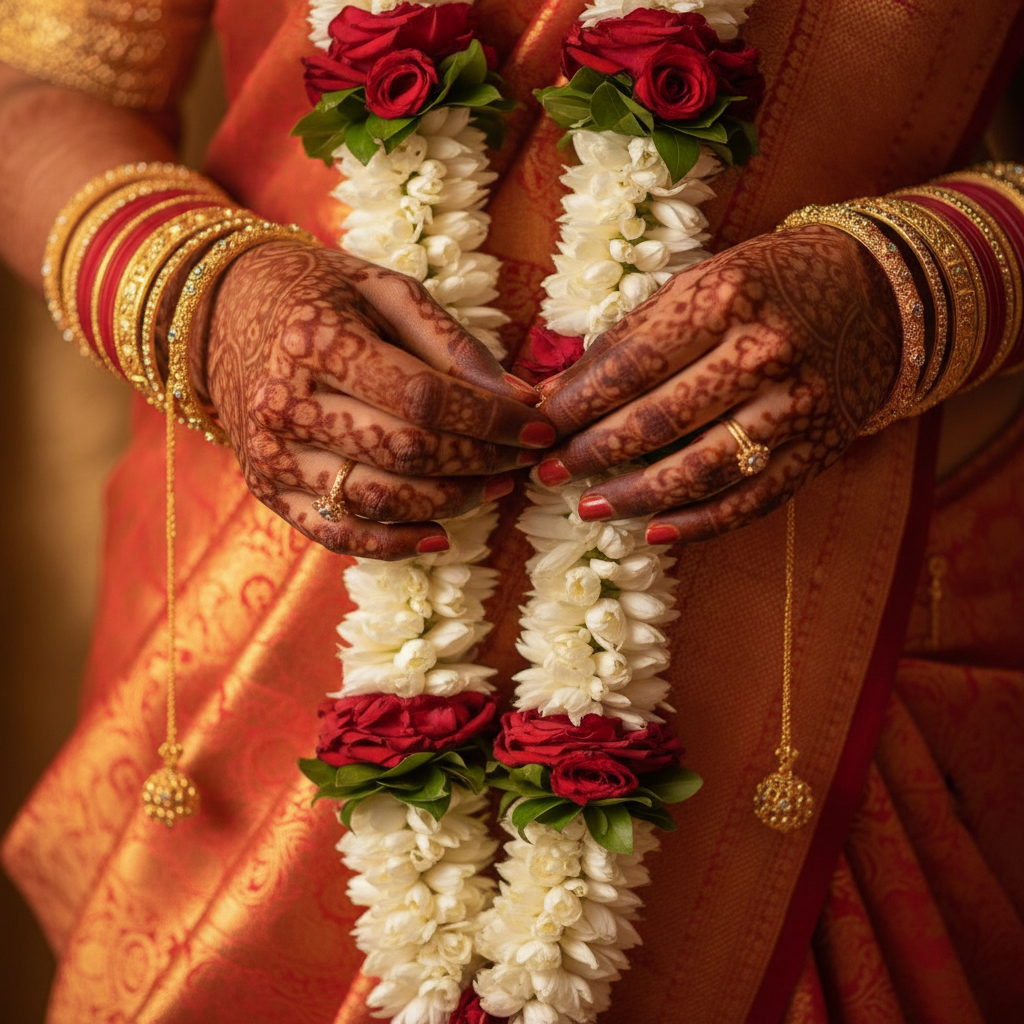
Our process turns vision into a reliable production plan. We map rituals and design choices into a milestone timeline, secure vendors, and rehearse transitions. On the day, a senior producer calls cues so every tradition lands on time and on message.
Step-by-step roadmap
We use a 6–12 month runway for most London weddings, with critical decisions locked by T–90 days:
- Vision workshop (T–9 to T–12 months): values, rituals, guest map, and style direction.
- Venue selection (T–8 to T–11 months): capacity, load-in paths, rehearsal windows, AV policy.
- Design development (T–6 to T–9 months): lookbook, mood boards, sample table, mandap mockup.
- Vendor network (T–5 to T–8 months): 6–10 core vendors: décor, AV, caterer, photo/video, DJ, transport.
- Guest logistics (T–3 to T–6 months): RSVP targets (70–85% acceptance), room blocks, coach routing.
- Rehearsals and show-calling (T–0 to T–30 days): cue sheets, scripts, and 2–3 contingencies.
| Phase | Primary Output | Typical Duration |
|---|---|---|
| Vision + Budget Guardrails | Experience map, priorities, style | 2–3 weeks |
| Venue + Date | Hold confirmations, access plan | 3–6 weeks |
| Design | Lookbook, sample table | 4–6 weeks |
| Vendors | Contracts, timeline v1 | 3–5 weeks |
| Guest Logistics | RSVP system, transport plan | 2–4 weeks |
| Rehearsals | Cue sheets, run of show | 1–2 weeks |
For families planning travel-heavy weekends, see our destination planning guide for sequencing visas, flights, and hotel blocks without derailing rehearsal windows.
Pricing (Scope & Investment)
We tailor scope to your rituals, guest count, and production needs. Investment varies with venue complexity, design scale, entertainment blocks, and multi-day scheduling. Our focus is clarity and value—prioritizing decisions that elevate experience and protect tradition.
Every Gujarati wedding has a unique blend of events, from intimate grah shanti at home to a 400–600 guest reception. Scope—and therefore investment—changes with factors like multi-set design (e.g., ceremony to reception flip in 45–60 minutes), backline for live bands, and the number of guest coaches required.
Instead of guessing, we map three scope options that reflect your priorities: ritual-first, design-forward, and guest-experience-maximized. Each option details vendor counts (often 6–12), crew hours (commonly 120–200 total across the weekend), and gear needs (e.g., 18–24 moving lights for a large sangeet stage). We then select the path that best balances meaning and momentum.
You can explore tradeoffs and common blind spots in our planning mistakes explainer and our London wedding party guide.
Why Choose Patel Events
We combine 27+ years of experience, 500+ events, and deep fluency in South Asian rituals with a London-first vendor network. The result: culturally faithful ceremonies, elevated design, and on-time execution families trust.
Here’s what sets our Gujarati wedding planning in London apart:
- Ritual fluency: we align priest requirements to venue rules and never compromise sacred timing.
- Design precision: mandap engineering that respects fire-safety and sightline math for 250–600 guests.
- Vendor ecosystem: 50+ trusted partners across décor, AV, catering, and transport for reliable delivery.
- Proven process: minute-by-minute cueing with 2–3 fallback paths so moments land even if timelines shift.
We also document lessons learned after every event. For instance, adding a 10–12 minute hydration/reset break before the garland exchange keeps elders comfortable without losing energy. Micro-optimizations like these compound into a smoother weekend for everyone.
For couples blending traditions, our Indian wedding planners overview shows how we integrate cross-cultural elements while protecting the core of each ritual.
Service Area
We plan Gujarati weddings across London and the wider UK, with frequent work in Leicester, Kent, and Tooting. We also support destination weddings in India—especially Udaipur and Goa—and select overseas venues.
Our roots are in Harrow, and we regularly coordinate guest movement near key transit points to simplify arrivals. For example, when family clusters arrive via Kenton station, we position a welcome desk and allocate 12–18 minutes for group transfers. The same approach works around Northwick Park station during peak times.
We scale teams to match guest counts—from intimate 80–120 person ceremonies to 500–600 guest receptions—maintaining a 1:80 coordinator-to-guest ratio on peak functions. This keeps lines short (under 3–5 minutes) at welcome desks and ensures elders receive prompt seating support.
Local considerations for London
- Build 15–20% timing buffers around Saturday traffic and station arrivals near Kenton station for smoother guest check-ins.
- Seasonal note: winter sunsets around 4 p.m. affect natural-light portraits; plan a 25–35 minute indoor photo slot.
- For venues with strict 11 p.m. sound curfews, cap sangeet medleys at 12–15 minutes and pre-stage DJ transitions.
Testimonials
Families choose Patel Events for calm leadership, cultural fluency, and on-time execution. They highlight smooth guest movement, heartfelt ceremonies, and sangeet productions that keep energy high without running late.
“Our parents felt heard, and every ritual—from grah shanti to vidai—was exactly right. The team kept the schedule tight without rushing anyone.”
“The sangeet production and reception flow were flawless. Our 500 guests were seated in 10 minutes, and the mandap flip finished in under 50.”
“Vendors were coordinated down to the minute. We had a quiet 8-minute window before phera to breathe—best decision we made.”
Frequently Asked Questions
Start 9–12 months out, prioritize venues and priests first, and assign a single decision-maker for timelines. A planner integrates rituals, vendors, and logistics so nothing slips between teams.
How early should we begin planning a Gujarati wedding in London?
We recommend starting 9–12 months out, and 15–18 months for peak summer Saturdays. Secure your venue and priest first, then lock design and core vendors by T–180 days. Keep 15–20% buffer time in your schedules for London traffic and venue access windows.
Which Gujarati rituals do you typically manage?
Commonly: grah shanti, pithi/haldi, sangeet/garba, baraat, the wedding ceremony, and vidai, followed by a reception. We coordinate priest requirements, rehearsal cues, and guest seating so each tradition lands respectfully and on time.
Can you blend modern design with traditional Gujarati customs?
Yes. We start with the ritual needs, then develop a design language—mandap architecture, florals, lighting—that complements sacred moments. For example, we use warm color temperatures (2700–3000K) around pheras and brighter, dynamic looks for sangeet performances.
Do you help with guest transportation and wayfinding?
Absolutely. We map coach routes, set up welcome desks, and coordinate station meet-and-greets. For 300–600 guest receptions, we deploy 3–6 coordinators and signage to keep queue times under 3–5 minutes at peak arrival.
Final CTA
Ready to plan a culturally faithful, beautifully orchestrated Gujarati wedding in London? Book a discovery call with Patel Events and we’ll map your weekend from first ritual to last dance.
If you want a planner who protects tradition and elevates guest experience, we’d love to help. Tell us your must-have rituals, approximate guest count, and any venue shortlists. We’ll propose a clear roadmap with milestones and contingency paths.
- Share dates and estimated guest count (range is fine)
- List your must-have rituals and any design inspirations
- Tell us where guests are traveling from (helps with routing)
We’ll return with an integrated plan and timeline you can trust.
Citations and resources
Menu planning, entertainment trends, and venue logistics evolve yearly. We monitor trusted industry resources and apply those insights to London Gujarati weddings so timelines, stages, and service plans reflect current best practices.
For creative menu structure ideas, see this overview of wedding catering menu planning. For entertainment ideas and production notes, recent Indian wedding entertainment trends outline emerging formats. For venue checklists, review this South Asian venue planning guide to spark questions for your London venue team.
Key takeaways
Start early, script everything, and protect sacred timing. Integrate design, logistics, and entertainment into one plan—and build 15–20% buffers for London realities. That’s how Gujarati weddings stay meaningful and on time.
- Launch planning 9–12 months out; lock venue and priest early.
- Design with sightlines and fast set flips (under 45–60 minutes).
- Keep coordinator-to-guest ratios near 1:80 at peak functions.
- Use 2–3 contingency paths and 15–20% timing buffers.