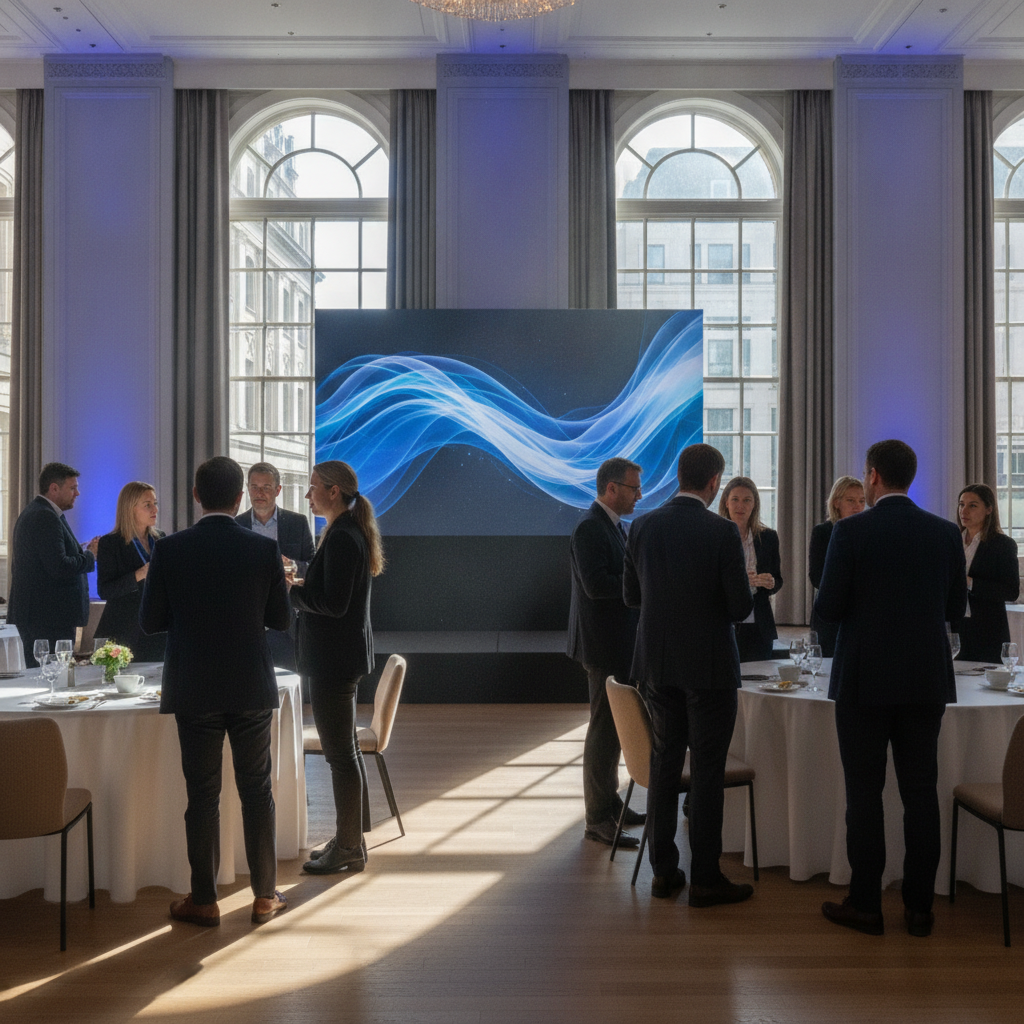
Corporate event management is the end-to-end strategy, planning, production, and on-site coordination of business events like launches, conferences, and galas. It aligns goals with audience needs, orchestrates vendors and logistics, and measures outcomes. In HA3 0PB and across London, Patel Events turns moments into brand assets that inform, motivate, and convert.
By Shani Patel • Last updated: 2026-06-28
Above-Fold Guide + Quick Navigation
Use this practical complete guide to plan corporate events with confidence. You’ll learn what corporate event management is, why it matters now, the step-by-step workflow, formats to choose, proven checklists, the essential tech stack, HA3 0PB local tips, and short case studies—plus clear next steps.
- Overview
- What is corporate event management?
- Why it matters
- How it works (step-by-step)
- Event types and formats
- Best practices + checklists
- Tools and resources
- Case studies
- FAQ
- Conclusion + next steps
Overview
Corporate events succeed when objectives, guest experience, and production discipline align. Start with a one-page brief, design for flow, document risks, rehearse the show, and follow up fast. With 27+ years of delivery, Patel Events applies a repeatable model that scales across London programs.
- What you’ll get: Definitions, frameworks, timelines, and checklists you can use today.
- Who it’s for: Marketing, HR, Communications, and Operations teams planning business events.
- Our edge: 500+ events executed, 98% satisfaction, and a network of 50+ trusted partners.
- Deeper dives: See our corporate events guide for strategy nuances and our planning checklist for day-by-day prep.
What is corporate event management?
Corporate event management is the professional strategy and execution behind business events—defining objectives, designing guest journeys, coordinating vendors, managing risk, and measuring outcomes. Done well, it transforms time-bound moments into long-term brand assets that educate, motivate, and convert.
At Patel Events, corporate event management means full-scope ownership: strategy, creative, logistics, and show-calling. With roots in Harrow and delivery across London and the UK, we integrate décor, staging, lighting, A/V, catering, guest services, and accessibility into one cohesive plan. That cohesion reduces risk and elevates experience.
We translate your goals into a detailed run-of-show: content flow, pacing, transitions, and signature moments. For product launches, we build reveal choreography and demo redundancy. For conferences, we balance plenary energy with breakout depth. For galas, we pace awards to under an hour so recognition lands and the room stays engaged.
To explore foundations and pitfalls in more depth, our event management company guide outlines vendor roles, approval cadences, and production rhythms that keep complex programs on track.
Why corporate event management matters
Well-run corporate events build trust, loyalty, and pipeline. Strong planning reduces risk, protects brand reputation, and raises attendee satisfaction. With clear objectives, disciplined production, and post-event follow-up, events become repeatable growth engines—not one-off line items.
- Brand reputation is at stake: A single evening shapes perception. Smooth registration, on-time keynotes, and crisp audio can lift satisfaction scores meaningfully; poor sound or overruns can depress feedback and reduce repeat attendance.
- Moments drive memory: Guests recall peaks and transitions. Script signature beats—opens, reveals, awards—and minimize downtime between segments to keep energy high and chatter low.
- Risk is real-time: Weather shifts, transport delays, and tech hiccups happen. A documented plan with owners, radio comms, and clear escalation paths shortens response times and keeps shows on-pace.
- Content has a second life: Captured talks, panels, and demos fuel post-event marketing. Patel Events’ cinematography team supports capture and quick editing so you can repurpose content within 72 hours.
- Culture and retention: Town halls, kickoffs, and galas influence morale. Transparent Q&A, accessible staging, and thoughtful recognition correlate with stronger weekly pulse scores after the event.
In our experience, organizations that codify a simple KPI board—attendance rate, qualified meetings, session ratings, sentiment, and earned media—see faster internal follow-through. We formalize this in wrap decks so Sales, HR, or Comms act immediately.
How corporate event management works (step-by-step)
Delivery follows six phases: discovery, design, planning, production, show day, and wrap-up. Each phase outputs briefs, schedules, scripts, risk logs, and ROI reports, so owners and deadlines stay visible and decisions move on time.
Six-phase workflow
- Discovery (1–2 weeks): Clarify objectives, audience, KPIs, compliance needs, brand guardrails, and budget parameters. Confirm decision cadence and stakeholder map.
- Experience Design (2–4 weeks): Theme, scenography, content architecture, talent sourcing, and preliminary run-of-show (ROS). Align creative with goals and audience energy.
- Detailed Planning (4–8 weeks): Venue hold and contract, vendor RFPs, menu tasting, floor plans, A/V spec, staffing matrix, risk register, accessibility routes, and transport plan.
- Production Build (2–3 weeks): Final scripts, cue sheets, content collection, signage proofs, rehearsal plan, freight schedule, radio/comm checks, and room flips documented.
- Show Day(s): Load-in, rehearsal, show-calling, stage management, guest services, housekeeping, incident tracking, and run-of-show timekeeping.
- Wrap & ROI (1–2 weeks): Tear-down, reconciliation, KPI dashboard, lead handoff, content reuse plan, and lessons learned for the next cycle.
| Phase | Primary Owner | Core Documents | Success Markers |
|---|---|---|---|
| Discovery | Client + Planner | Brief, KPI list | Clear goals agreed |
| Design | Creative Lead | Moodboard, ROS v1 | Approved concept |
| Planning | Producer | Timeline, Risk log | Vendors locked |
| Production | Show Caller | Scripts, Cues | Rehearsal ready |
| Show Day | Stage Manager | Call sheet | On-time program |
| Wrap | Analyst | ROI deck | Insights shared |
Local considerations for HA3 0PB
- Plan crew call times around transit peaks near Preston Road Station to smooth load-in and guest arrivals.
- For evening galas, build shuttle buffers from Northwick Park station when scheduling receptions and closing remarks.
- Hold a wet-weather contingency for any outdoor segments; sudden showers shift guest flow and signage needs quickly.
For seasonal programming, our corporate holiday party guide explains lead times, entertainment flow, and décor tactics that keep winter schedules on track without overstretching crews or venues.
Types of corporate events and formats
Corporate events include launches, conferences, town halls, roadshows, kickoffs, and galas. Match format to objective: educate (conferences), celebrate (galas), motivate (kickoffs), or sell (demos). Hybrid and experiential activations extend reach and deepen engagement when teams are distributed.
Core formats we produce
- Product launches: Staged reveals, demo redundancy, hands-on testing zones, and a press briefing schedule. A focused 60–90 minute ROS works well.
- Conferences: Plenary + breakouts, sponsor exhibits, speaker greenrooms, app-based agendas, and content capture pods.
- Town halls: Leadership Q&A, moderated questions, accessible staging, assisted listening, and live captioning.
- Annual galas: Red-carpet arrival, awards pacing under 60 minutes, entertainment interludes, and choreographed service.
- Sales kickoffs: High-energy openers, training tracks, recognition beats, team-building, and offsite breakouts.
- Roadshows: Repeatable set design, freight efficiency, local talent swaps, and regional PR coordination.
- Brand activations: Pop-ups, immersive vignettes, sampling, and social-first photo moments.
- Press briefings: Tight formats, AV redundancy, media risers, and interview pods adjacent to the main room.
- Investor days: Clear sightlines, data-forward content, disciplined timing, and controlled Q&A.
- Recruiting events: Portfolio zones, meet-the-team sessions, micro-talks, and live demos.
- Community/CSR events: Volunteer logistics, storytelling booths, and partner showcases.
Format selection matrix (quick view)
| Objective | Best Format | Key Elements | Time Window |
|---|---|---|---|
| Educate | Conference | Breakouts, app, capture | Half to multi-day |
| Celebrate | Gala | Awards, entertainment | Evening program |
| Motivate | Kickoff | High-energy open, training | 1–2 days |
| Sell | Launch | Demo zones, media | 60–90 min ROS |
| Reach | Hybrid | Streaming, Q&A | Live + on-demand |
Want a deeper dive into launch flow? Our product launch management primer covers reveal beats, demo staffing, and press routing so media and buyers both win.
Best practices and checklists
Lock objectives early, then design for flow. Shorten transitions, script signature moments, build A/V redundancy, and rehearse. Assign risk owners and comms. Afterward, measure outcomes and repurpose content within one week to sustain momentum.
Planning foundations
- Define outcomes: Registrations, qualified meetings, session ratings, sentiment, earned media, or employee engagement.
- Right-size agenda: Sessions in 20–30 minute blocks help recall and keep pace brisk.
- Map arrivals: Staggered check-in desks, QR scanning, and clear wayfinding keep the queue moving.
- Accessibility first: Step-free routes, quiet rooms, captioning, assisted listening, and sightline design.
- Vendor matrix: Maintain live contacts, SLAs, backups, specs, and delivery windows; Patel Events coordinates 50+ partners.
- Menus & service: Balance passed canapés and stations to reduce bottlenecks; plan hydration stations near doors.
- Photography & film: Lock a shot list that supports post-event stories and social; build protected camera zones.
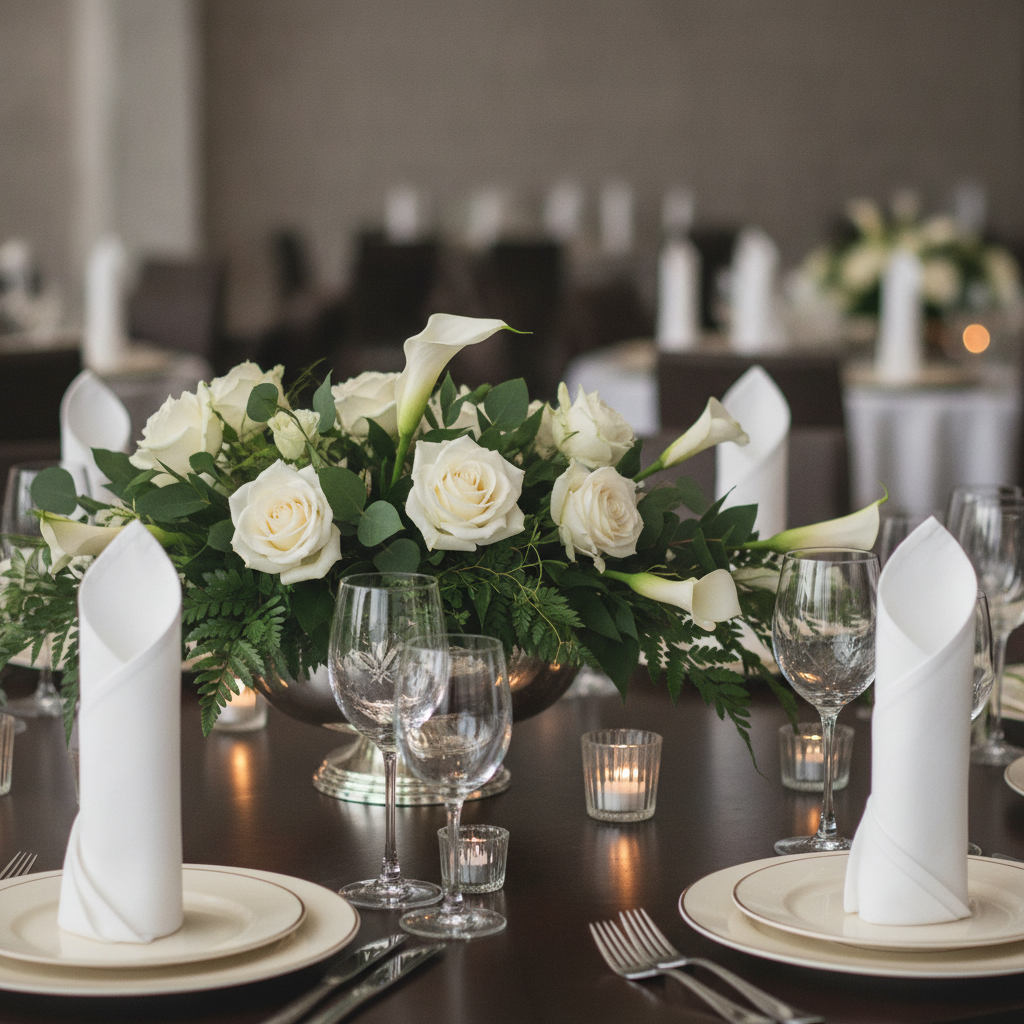
Show-readiness
- Run-of-show: Minute-by-minute cues, speaker timings, VT roll cues, and housekeeping notes at the lectern.
- Technical redundancy: Backup mics, mirrored laptops, spare dongles, and printed scripts.
- Briefings: A 15-minute stage brief for talent; radio channel map posted at crew call.
- Rehearsal: Full tech check, walk-ons and walk-offs, content playback, and mic handling practice.
- Guest services: Clear signage, staffed info points, and a visible “ask me” team improve wayfinding.
- Incident logging: Track issues and resolutions to inform the wrap deck and next show’s mitigations.
Sustainability checklist
- Materials: Favor reusable scenic, LED lighting, and digital agendas to cut print waste.
- Catering: Work with venues on surplus donation or composting; spotlight local suppliers.
- Transport: Encourage public transit; align timing around peak flows in HA3 0PB.
- Waste streams: Place clearly labeled stations; brief staff on what goes where.
Post-event momentum
- Follow-up (24–72 hours): Send recordings, slides, highlight reels, and next-step CTAs while memory is fresh.
- ROI board: Attendance vs. registrations, dwell time, ratings, sentiment, and earned media.
- Content reuse: Edit talks into shorts; turn panels into articles and sales enablement kits.
- Debrief: 30-minute internal review to capture lessons and update playbooks.
For a ready-to-use prep flow, download the sequence from our in-depth corporate planning checklist and adapt it to your timeline.
Planning a London program? Book a soft-scope discovery in HA3 0PB. We’ll map objectives, timelines, and a draft run-of-show so you can brief stakeholders with confidence.
Tools and resources to run events
Pair an event platform with registration, a mobile app, and analytics. Add production tools—cueing, lighting, and comms—and compliance frameworks for safety and accessibility. A simple, integrated stack prevents silos and speeds on-site decisions.
Tech stack essentials
- Registration + check-in: Branded forms, confirmations, QR badges, and waitlist logic for auto-fill.
- Mobile app: Agenda, maps, speaker bios, live polls, push alerts, and feedback forms.
- Streaming/hybrid: RTMP-ready encoders, redundant internet, moderated Q&A, and captioning.
- Analytics: Attendance curves, dwell time, session ratings, heat maps, and exportable dashboards.
Production and compliance
- Comms: Radios with spare batteries; channel plan posted and briefed.
- Lighting + audio: Rehearsed cues, backup mics, and clear emcee reads.
- Risk + safety: Documented evacuation routes, incident logs, first-aid cover, and weather clauses.
- Accessibility frameworks: Captioning, assisted listening, step-free routes, and signage with high contrast.
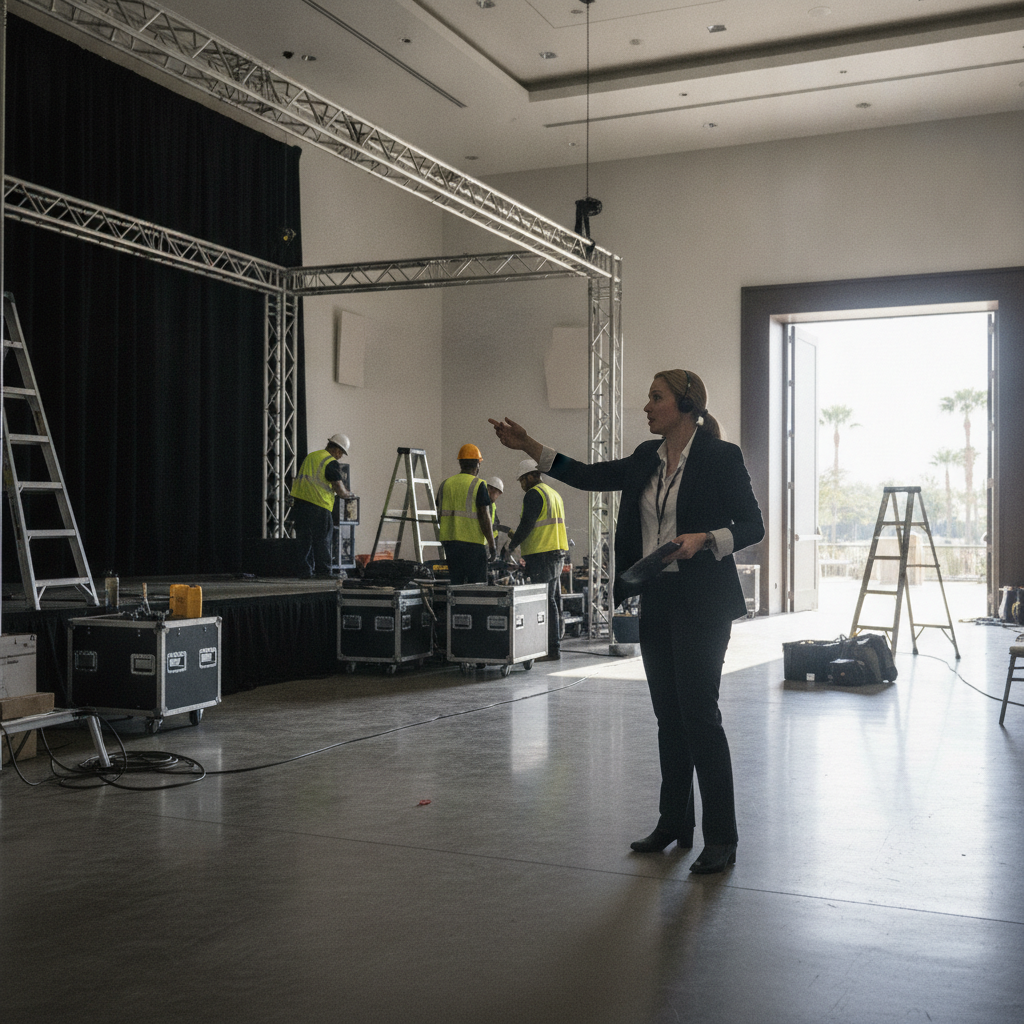
Venue readiness matters. For a different perspective on venue elements teams often overlook, see this practical overview of key venue factors. For hybrid-heavy plans, here’s a compact explainer on launching virtual events. And for an at-a-glance venue check, review a concise corporate events page to benchmark space and flow considerations.
Case studies: recent London programs
These three condensed examples show how disciplined planning drives results—a product launch, a leadership town hall, and an annual gala. Each highlights goals-to-ROS alignment, risk planning, and fast follow-up.
1) Fintech product launch (central London)
Objective: Secure analyst coverage and 1:1 demos. Approach: A 75-minute reveal with mirrored demo laptops, a press briefing room, and a staffed demo lounge. We staged the reveal with light cues, built a media riser, and routed VIP arrivals to avoid congestion. Result: Dozens of qualified demos were logged by end of day and same-week industry coverage followed.
Why it worked: The agenda kept transitions under two minutes and protected the core reveal from tech risk with A/B redundancy. Content capture fed a highlight reel within 48 hours to extend reach.
For more on reveal pacing and media routing, our short launch primer details staffing, cueing, and floor-plan tips that reduce on-site friction.
2) Global town hall (hybrid)
Objective: Strengthen culture and transparency across time zones. Approach: A 60-minute stream with live Q&A, ASL interpretation, and on-site showcases of employee projects. We designed parity between in-room and remote experiences, used a moderator to triage questions, and ensured captioning was on by default. Result: High attendance relative to invites and improved sentiment on the following week’s pulse checks.
Why it worked: Tight pacing, clear sightlines, and inclusive staging kept attention high. A playbook for remote access and follow-up ensured those not in the room still received assets and next steps.
3) Annual charity gala
Objective: Celebrate milestones and spotlight partners. Approach: Awards pacing locked to 55 minutes, balanced entertainment, and choreographed dinner service to limit room noise. We designed a red-carpet arrival, a thematic photo moment, and an efficient stage reset plan between awards. Result: Standing ovations and a surge in partnership inquiries the following week.
Why it worked: The run-of-show prioritized recognition beats and eliminated dead time. A focused script and rehearsed presenter walk-ons reduced overruns and kept attention on honorees.
If you’re planning executive dining, our corporate dinner guide covers menu pacing, tablescapes, and flow so conversation and program cadence complement each other.
Frequently Asked Questions
These concise answers address the questions we hear most—from timelines to measurable outcomes. Each response is practical, direct, and grounded in on-site experience.
What is the ideal planning timeline?
For 150–300 guests, 12–16 weeks is common from concept to show day. Larger conferences may need 4–6 months. Compressed schedules are feasible with clear approvals and a proven vendor network coordinating in parallel.
How do you measure success?
Define KPIs up front—attendance rate, qualified meetings, session ratings, sentiment, and earned media. Publish a wrap report within one to two weeks so Sales, HR, or Comms can act on leads and insights quickly.
What’s the most common production risk?
A/V handoffs. Prevent issues with rehearsed walk-ons, backup mics, mirrored laptops, and a printed script at the lectern. An experienced show caller maintains pace and minimizes visible hiccups.
Do you support hybrid events?
Yes. We pair on-site staging with streaming, moderated Q&A, and captioning. The goal is parity—remote attendees should access content, ask questions, and receive follow-ups like those in the room.
Conclusion and next steps
Treat corporate event management like product delivery: set strategy, design for users, ship with quality, and iterate. Align goals, flow, and metrics, and your events become reliable drivers of brand, culture, and pipeline.
- Key takeaways: Clear objectives, disciplined run-of-show, named risk owners, and fast follow-up unlock repeatable success.
- Action steps: Draft a one-page brief, outline the agenda, identify decision owners, and book a venue hold.
- Let’s talk: Book a discovery session in HA3 0PB to map your program with Patel Events.