Venue-ready styling guidance for Greater London weddings
Choose Wedding Styling Trends That Work Across London
Short answer. Choose a wedding styling direction only after testing it against the venue's room proportions, installation rules, supplier access, ceremony transitions, guest movement and strike window. Current inspiration includes tonal floral meadows, sculptural entrances, layered table lighting, fabric draping, personalised paper details and décor designed to move from ceremony to reception. These are starting points, not universal forecasts or guarantees of availability.
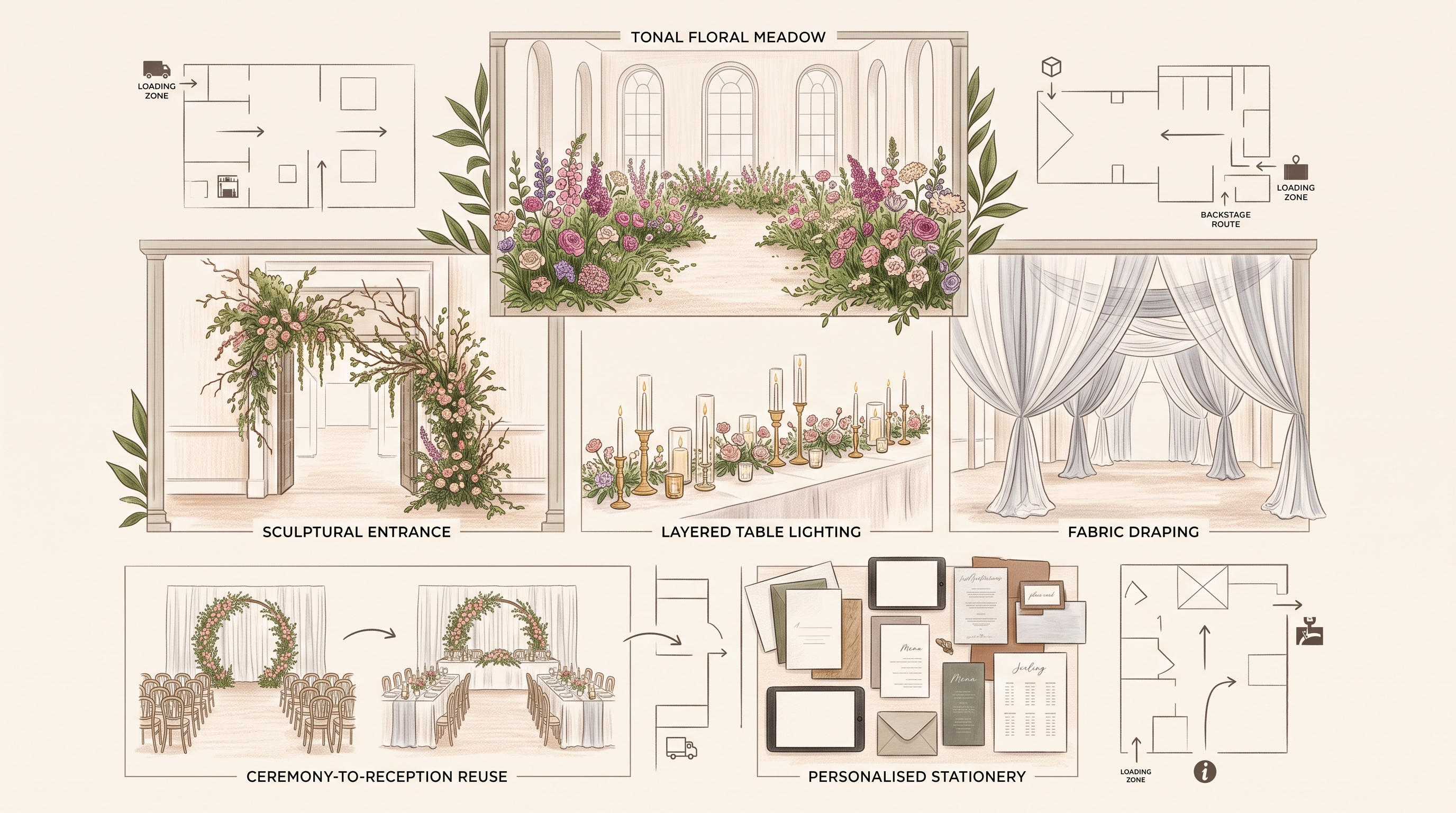
Treat every trend as a design direction that must earn its place in the room plan, ceremony flow and supplier schedule.
Start with a Greater London venue styling brief
Collect the floor plan, ceiling height, guest count, ceremony and reception layouts, accessible routes, installed finishes, natural light, power points, loading entrance, lift dimensions, parking rules, supplier hours, noise restrictions, candle policy, rigging rules and strike deadline. Ask the venue which surfaces may be fixed to, what protection is required and who approves temporary structures.
Then define three design priorities. Examples might be a ceremony focal point, warm guest-level lighting and a reception transition that preserves cultural or family details. Put every other idea beneath those priorities. A trend that consumes floor area, time and budget without supporting the brief should be removed.
Patel Events publishes a current decoration service route and décor portfolio. Use them for discussion, but confirm current scope, relevance, availability and price for the actual venue and date.
Explore six wedding styling directions without copying a template
1. Tonal floral meadows
Low, layered floral shapes can frame aisles or stages without a single oversized centrepiece. Ask about sightlines, floor protection, stem choices, water, reuse and removal. Natural or artificial materials are not automatically more sustainable; assess sourcing, transport, reuse and disposal evidence.
2. Sculptural entrances with a clear guest purpose
An entrance piece can combine welcome, wayfinding and a photograph moment. Keep the accessible route and queue clear. Confirm wind, anchoring and weather if any part is outdoors.
3. Layered table lighting
Combine room lighting, pin spots, shaded lamps or approved flameless elements to create depth at guest level. Test camera exposure, power, cables, heat and venue policy. Do not assume open flame is allowed.
4. Architectural fabric draping
Draping can soften a neutral room, frame a stage or hide a service edge. It also adds material, installation time, fixing requirements and potential fire considerations. Obtain written approval and a method statement where appropriate.
5. Personalised paper and textile details
Menus, place cards, table markers and family motifs can carry the story without another large installation. Confirm final names, languages, spelling, dietary wording and print deadlines. Cultural symbols should be reviewed by the couple and relevant family or faith advisers.
6. Ceremony-to-reception reuse
Design selected aisle, floral or backdrop elements for a documented move to the reception. Reuse works only if the route, timing, crew, temporary holding point and second layout are realistic. Do not count the same element in two places at the same time.
Match each trend to the actual room and programme
Use this article roadmap to review the key sections in order, then verify current details for your situation before acting.
| Direction | Space question | Production question | Best fit signal |
|---|---|---|---|
| Floral meadow | Does it protect sightlines and circulation? | How is it watered, moved and removed? | Strong ceremony focal area with usable floor depth |
| Sculptural entrance | Can arrivals queue without blocking access? | What supports, weather and installation approvals apply? | Defined threshold and separate accessible route |
| Layered lighting | Are power and cable paths suitable? | Who supplies, tests and removes each element? | Venue permits controlled supplemental lighting |
| Draping | What ceiling and wall features may be covered? | Which fixing and fire requirements apply? | Neutral room with approved installation points |
| Paper details | Where will guests read them? | Who owns data, proofing and placement? | Complex seating, menu or multilingual information |
| Reusable décor | Is there a safe route and holding space? | Can the move happen within the programme? | Separated ceremony and reception with a realistic reset |
Plan supplier and guest movement across Greater London
Build a supplier arrival schedule around the venue's true access window. Separate florist, décor, lighting, catering and entertainment vehicles where the loading area is limited. Record vehicle height or parking restrictions, lift booking, security contact, unloading duration and where empty cases may stay.
Check current transport conditions close to the date. Transport for London maintains major works and events information that may affect supplier and guest journeys. Give guests route options and a last-check reminder rather than promising one journey time.
Create a strike plan before approving the build. List who removes flowers, fabric, lighting, stationery, frames and waste; when vehicles may return; and what the venue expects at handback. A style is not locally workable if it can be installed but not removed within the contracted window.
Confirm installation, flame and temporary-structure rules
HSE's event-safety planning guidance advises proportionate planning, clear safety responsibility and liaison with venue management. Styling suppliers should share relevant method, structure, power and access information with the responsible organiser and venue.
For candles, confirm venue rules in writing. London Fire Brigade advises keeping decorations away from naked flames and describes flameless candles as a safer alternative. The venue's fire-risk controls and supplier method still govern the event.
Pause a design when an exit is obstructed, a floor or ceiling capacity is unknown, a fixing method is unapproved, power is improvised, drape or floral material sits near heat, or installation responsibility is unclear. Visual impact never overrides safe access.
Design multi-ceremony and cultural transitions thoughtfully
Map every ritual, entrance, family role and photography pause before placing styling elements. A mandap, stage, aisle, signing table or reception backdrop can have ceremonial meaning as well as visual weight. Ask the couple and relevant advisers what may be moved, reused, faced in a particular direction or left undisturbed.
Use one visual language—palette, material, motif or lighting temperature—across events without making every room identical. This creates continuity while allowing each ceremony to keep its own purpose. Document pronunciation, scripts and symbols carefully; do not use cultural detail as generic decoration.
Common Greater London wedding styling mistakes
Choosing from close-up images only
Request wide views and scaled room plans so floor area and sightlines are visible.
Approving décor before venue rules
Confirm access, fixing, flame, power, rigging, build and strike requirements first.
Calling reuse a saving without a move plan
Reuse needs labour, route, timing, holding space and a second placement design.
Ignoring travel and loading uncertainty
Use current route checks and sequenced supplier windows.
Copying a cultural reference without context
Let the couple and appropriate advisers define meaning, placement and boundaries.
Frequently asked questions about London wedding styling
Which styling trend works in a small venue?
Prioritise guest-level lighting, paper detail and one focal element, but decide from the floor plan, access and venue rules rather than room size alone.
Can ceremony flowers be reused at the reception?
Sometimes. Confirm the physical design, water and handling needs, travel route, crew, reset window and second placement before relying on reuse.
Are real candles allowed at London wedding venues?
Policies vary. Obtain written venue approval and supplier safety details; consider approved flameless alternatives.
How far ahead should styling be finalised?
Work backwards from venue approval, custom production, floral ordering, supplier access and print proofing. The actual date depends on scope and availability.
Contact Patel Events with a venue-ready styling brief
Prepare the date, venue, floor plan, guest count, ceremonies, three design priorities, reference images, cultural requirements, access window and known venue rules. Review Patel Events' current FAQ, then use its enquiry route to confirm styling scope, logistics, supplier responsibilities, price and availability.