Corporate product launch ideas compared for scale, cost bands, and primary KPIs
Choose a launch format that matches one clear commercial goal, not every good idea at once. Below are seven distinct corporate product launch ideas. Each numbered item explains the best-fit use case, a visible cost band, the single primary KPI to track, three practical production checkpoints, and a brief London logistics note to help marketing and events teams decide fast. For a full planning playbook, see the Patel Events guide on how to plan a product launch.
How to use this comparison
Scan the list, pick the format whose primary metric matches your top priority, and adopt the three production checkpoints before you brief vendors. Selection criteria for these seven formats included audience reach, conversion intent, production complexity, and suitability for B2B launches.
1. Pop-up experience: immersive short-run demo
Best for
Customer discovery and local brand activation where hands-on interaction drives trial, for instance retail tech devices or consumer hardware sampling.
Cost band and primary metric
Cost band: mid. Primary metric: proportion of walk-ins who convert to qualified leads or trials.
Three production checkpoints
- Modular set and power plan so demo stations are plug-and-play and safe for continuous guest use.
- Staffing plan with trained demonstrators and a single point of contact for guest issues and product faults.
- Data capture at each station with real-time lead qualification and a follow-up workflow integrated to CRM.
London logistics note
Short-term licences, high-footfall permissions, and delivery windows are critical in London. Book permissions and on-site loading slots early, since prime locations fill quickly.
Why not
If the product requires long technical demos or procurement approval, a pop-up can generate curiosity but not deep buyer education without complementary sessions or follow-up content.
2. Livestream reveal: digital-first, high-reach launches
Best for
Brands that need global reach, a minimal venue footprint, and measurable digital engagement, such as SaaS feature launches or developer API announcements.
Cost band and primary metric
Cost band: low to mid. Primary metric: live attendance and engaged-viewer percentage measured by platform analytics.
Three production checkpoints
- Choose a robust streaming platform; test bitrate, latency, and multi-CDN delivery under load.
- Script a moderator plan with timed Q&A, clear calls to action, and backup assets for technical interruptions.
- Prepare repurposable assets: short clips, timed social cards, and an immediate offer or landing page to convert viewers.
Why it works
Live reveals reach broader audiences quickly, and high-quality video assets support follow-up content that converts viewers into leads. Use gated content and clear conversion paths to improve lead quality.
London broadcast note
When broadcasting from a London studio or venue, allow time for line checks with in-house AV teams and confirm internet SLA during weekday peak hours.
3. Influencer and KOL preview: earn trust through third-party voices
Best for
Consumer or B2B markets where trusted third-party voices accelerate adoption, for example hardware or platforms that benefit from expert walkthroughs and reviews.
Cost band and primary metric
Cost band: mid. Primary metric: earned reach measured by press mentions and influencer content impressions within the embargo window.
Three production checkpoints
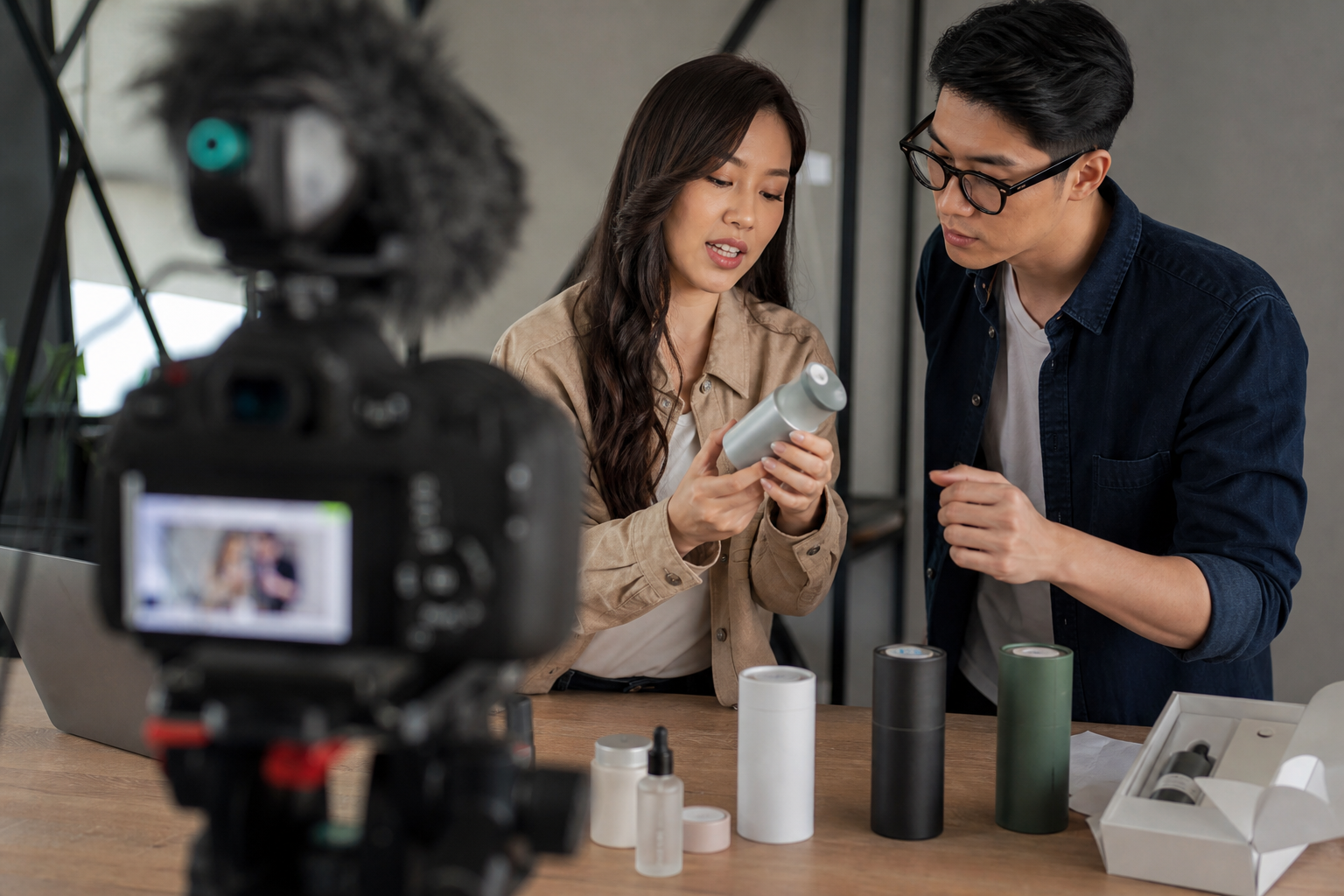
- Strict embargo management with a clear embargo time, approved talking points, and pre-cleared visual assets.
- Hands-on demo stations optimised for content: good lighting, neutral tabletops, and simple framing for mobile video.
- Distribution plan so influencer content drops align with owned channels and amplify the message at launch.
London press tip
Pitch a credible news angle and offer one-on-one briefings for priority journalists in central London or nearby venues to respect their schedules and travel time.
Risks and mitigation
Influencer messaging can vary. Provide a concise briefing pack and compliance boundaries so third parties represent features and claims accurately.
4. Co-creation lab: workshops that turn users into collaborators
Best for
Products that benefit from early adopter feedback, where user workflows shape roadmaps—examples include enterprise software, developer tools, and complex platforms.
Cost band and primary metric
Cost band: mid. Primary metric: lead quality and actionable product insight, measured by validated feature requests and trial commitments.
Three production checkpoints
- Facilitation plan with activities and timeboxes to surface use cases and consensus quickly.
- Prototyping tools and session materials to validate concepts in real time.
- Participant selection that balances power users, partners, and neutral prospects for diverse input.
London materials note
Book workshop rooms with movable furniture and reliable Wi-Fi. Source prototyping supplies from local vendors to avoid transit delays.
When to avoid
If you need rapid broad-market awareness, a lab is too selective and slow. Use it when depth and product insight matter more than scale.
5. Hybrid showcase: simultaneous live event and fully produced virtual stream
Best for
Companies that must serve both in-person VIPs and a remote global audience, for example enterprise launches combining executive announcements and live demos.
Cost band and primary metric
Cost band: premium. Primary metric: combined attendance-to-opportunity rate, tracking onsite VIP conversions and qualified remote leads together.
Three production checkpoints
- AV redundancy, including a backup encoder, local recording, and power contingency to avoid single points of failure.
- Audience experience parity so remote viewers receive structured interaction windows and meaningful engagement options.
- Moderation flows that merge in-room questions and remote chat into a single Q&A with a clear prioritisation method.
London AV supplier note
Work with an AV supplier experienced in hybrid productions and budget for rehearsal time. London venues differ in rigging and internet capacity, so confirm technical riders early.
Common trade-offs
Hybrid shows require more budget and coordination but amortise reach across geographies when executed well.
6. Buyer-focused private demo roadshow: tight conversion funnel

Best for
High-value enterprise products that sell through meetings and demos with procurement teams and channel partners.
Cost band and primary metric
Cost band: mid to premium. Primary metric: pipeline value or conversion rate from demo to sales-qualified opportunity.
Three production checkpoints
- Sales enablement assets tailored to buyer personas for each meeting and decision stage.
- Controlled demo environment to avoid technical issues and ensure a repeatable walkthrough.
- Follow-up sequencing that moves prospects into trial or procurement timelines within 48 hours.
London scheduling and travel note
Plan compact itineraries to minimise travel time between meetings. Consider regional hub venues in London with private demo suites to host multiple buyer appointments in a single day.
Objections
Roadshows are resource intensive and scale narrowly. Use them when a small number of high-value conversions justify the investment.
7. Staged launch party with narrative reveal: production-led brand statement
Best for
Brand-defining products where perception and media pick-up matter as much as short-term transactions—examples include flagship hardware and consumer platforms.
Cost band and primary metric
Cost band: premium. Primary metric: brand sentiment and media pick-up measured by qualitative coverage and share-of-voice metrics.
Three production checkpoints
- Scripted reveal with technical rehearsals and a clear cue sheet for lighting, sound, and video assets.
- Hero video or demo film to anchor the narrative and provide repurposed content for post-launch amplification.
- Guest journey design covering arrival, presentation, and post-reveal networking to reinforce the message.
London venue and production notes
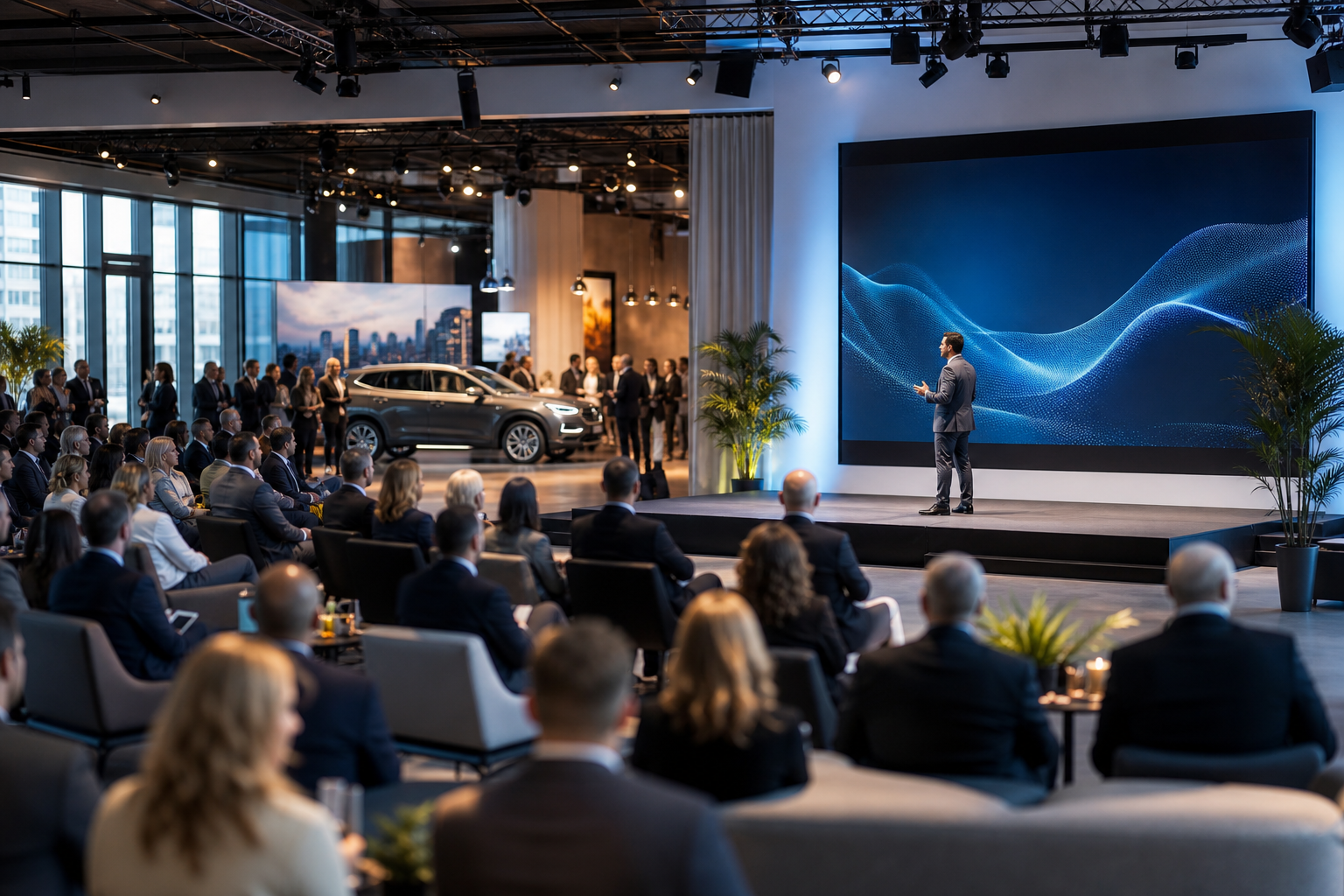
In London, venue tone and production quality set the narrative before the first slide. Avoid the default hotel ballroom keynote unless the production and story are redesigned to create impact, as many event specialists advise.
When the hotel-ballroom default will fail you
If you need a memorable brand statement, a generic ballroom and a long slide deck will underdeliver. Invest in creative set design and a focused narrative to avoid a forgettable reveal.
How to choose the right format: decision criteria and a 90-day checklist
Primary decision criteria
Match format to audience, primary KPI, budget, timeline, and distribution plan. If your goal is immediate sales conversations, pick buyer-focused demos. If your goal is reach and awareness, pick livestream or staged reveals.
One-line decision rule
Identify your single highest-priority KPI, choose the format optimised for that metric, then design pre-launch and post-launch tactics to support it.
90-day timeline checkpoints
Treat a high-performing B2B launch as a 90-day commercial motion: eight weeks of targeted pre-launch outreach and sales enablement, a focused reveal moment, and twelve weeks of post-launch content and follow-up, following specialist event planning guidance.
Vendor brief essentials and on-the-day run sheet items
- Vendor brief: objective, audience profile, KPI, run sheet, technical riders, contact list, and contingency plans.
- On-the-day run sheet: minute-by-minute cues, presenter timings, AV checks, and emergency contacts.
- Post-event follow-up: repurposed video clips, measurable CTA links, and a scheduled sales handover with owners and timelines.
Use the vendor brief and run sheet to align stakeholders and reduce day-of surprises. For a practical planning checklist and step-by-step timeline, see Patel Events' product launch planning resource.
Frequently asked questions
What budget band should I expect for each corporate product launch format in London without requesting exact prices?
Expect low-to-mid budgets for livestream reveals and small pop-ups, mid for influencer previews, co-creation labs, and buyer roadshows, and premium budgets for hybrid showcases and staged launch parties. Treat these bands as planning signals; final costs depend on scale and production values.
Can a livestream reveal replace an in-person launch and still deliver sales-ready leads?
Yes, if the livestream includes gated offers, clear conversion steps, and timely follow-up. High-quality video assets and real-time engagement features help convert viewers, but hybrid or buyer-focused formats usually outperform pure livestreams when deep technical demos are required.
How should I handle press embargoes and trade outreach for a London launch?
Offer trade press an embargoed preview with a clear embargo time and a concise press pack. Schedule one-on-one briefings for key journalists in central London or at convenient venues to respect their schedules. A targeted outreach plan with a credible news angle increases coverage chances.
What is the minimum timeline to produce a high-quality hybrid or staged launch?
Minimum lead time is typically 6 to 8 weeks for a well-produced hybrid or staged launch, including rehearsals and AV testing. For complex productions with bespoke sets or international guests, allow 10 to 12 weeks to secure suppliers and rehearsal space.
Which single KPI should I pick if I must choose only one to judge launch success?
Choose the KPI aligned with your commercial objective. For direct revenue focus, use pipeline value or conversion rate. For awareness, use qualified media impressions or engaged viewers. Match the format to that KPI early in planning and design measurement into every touchpoint.
Patel Events is a London-based event planning and management company offering end-to-end services across corporate events and product launches, including production, staging, and cinematography to support any of the formats above. Learn more or request a bespoke proposal on the Patel Events website.